
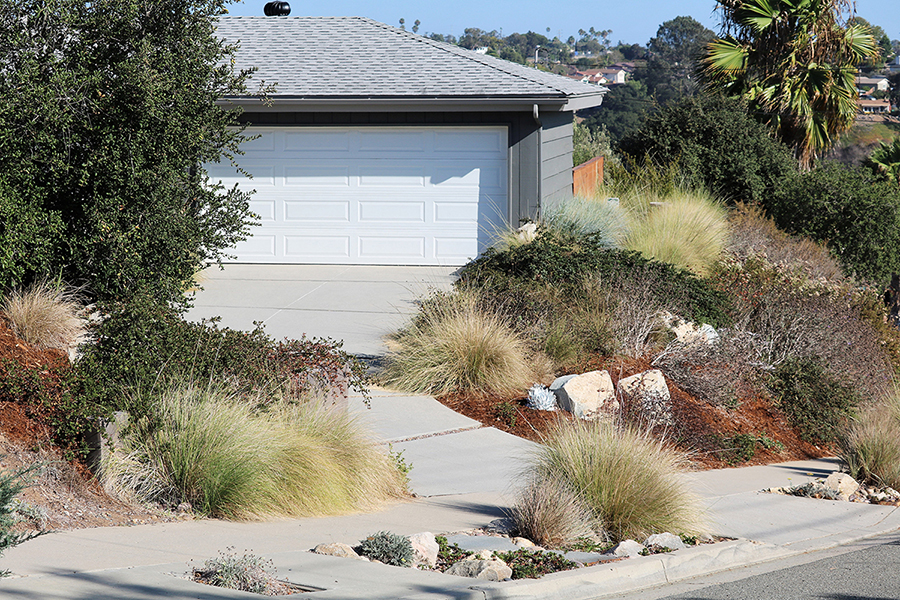
Photo Courtesy of California Native Plant Society, Calscape
How to Protect Your Home During Fire Season
Native plants are best for local birds. They give them food, shelter, and a safe place to nest. That's why protecting native habitat is at the heart of Conejo Valley Audubon Society's mission.
But fire season puts pressure on all of us to clear vegetation, and the advice out there can be confusing. Should you pull out every plant near your house? Is mulch dangerous? Most of the research on this topic looks at rural and wildland areas, which behave pretty differently from a neighborhood like ours.
A 2026 study of the Eaton fire in Altadena and the Palisades fire in Malibu gives us a clearer picture of what actually happens in places like Thousand Oaks. In crowded urban and suburban areas, fire tends to jump from house to house rather than spreading through tree canopy, though tree canopy still played a small and inconsistent role. The real culprits are radiated heat, direct flames, and embers carried on the wind. The biggest factor in whether a house burns down is how close it sits to its neighbors.
So what does that mean for your yard? It means the most useful things you can do are about your house itself, not your garden. Here are 5 steps that make a real difference.
Five ways to protect your home during fire season
1. Check your roof
Asphalt shingles, composition shingles, and properly installed tile roofs all resist fire well. If you have tile, take a look at the corners and roofline edges. Gaps there can let embers slip underneath and reach the wood below, so seal them up with a fire-resistant material.
2. Cover your vents
Any vent on your roof or opening under the eaves is a way embers can get into your attic. Covering them with fine metal mesh (1/16 inch holes or smaller) makes a big difference. If you use your attic for storage, just keep things away from those openings.
3. Clean your roof and gutters
Leaves and debris on your roof or in your gutters can catch a stray ember fast. Pay extra attention near chimneys and skylights, where debris tends to pile up. If you have a two-story house, this might be a job worth hiring out.
4. Look at your siding
Stucco and fiber cement hold up much better than wood siding. The less wood on the outside of your home, the better. One thing to know: fire-retardant paint doesn't last long in our strong Conejo Valley sun, so don't count on it as a long-term fix.
5. Clear debris from your walls
Dry leaves piled against your house are a real risk. Move furniture or storage away from your exterior walls so they don't trap leaves and debris. If a wooden fence touches your house, consider switching that section to metal.
What about your garden?
Here's the good news for native plant lovers: the area right against your house is the priority, not your whole yard. Dry leaves up against the foundation are risky. But out in the garden, leaf litter and wood chips help keep soil moist, support healthy plants, and feed the insects that birds rely on for food.
Swapping your garden beds for gravel or decomposed granite doesn't actually buy you much fire protection, and it comes at a real cost to the birds and insects that depend on healthy soil. A good rule of thumb: keep a clear strip right at the base of your walls, and let the rest of your garden be.
For a full home hardening checklist, visit readyforwildfire.org, the California Department of Forestry and Fire Protection's guide for homeowners.
Sources:
- Urban trees and structure loss in the 2025 Eaton and Palisades fires (ScienceDirect, 2026)
- Urban areas in the United States experience substantial wildfire impacts (Nature, 2026)
- Wildfire Home Retrofit Guide (PDF)
Author, Title: Diana Davis Biology Professor and Board Member, Conejo Valley Audubon Society